

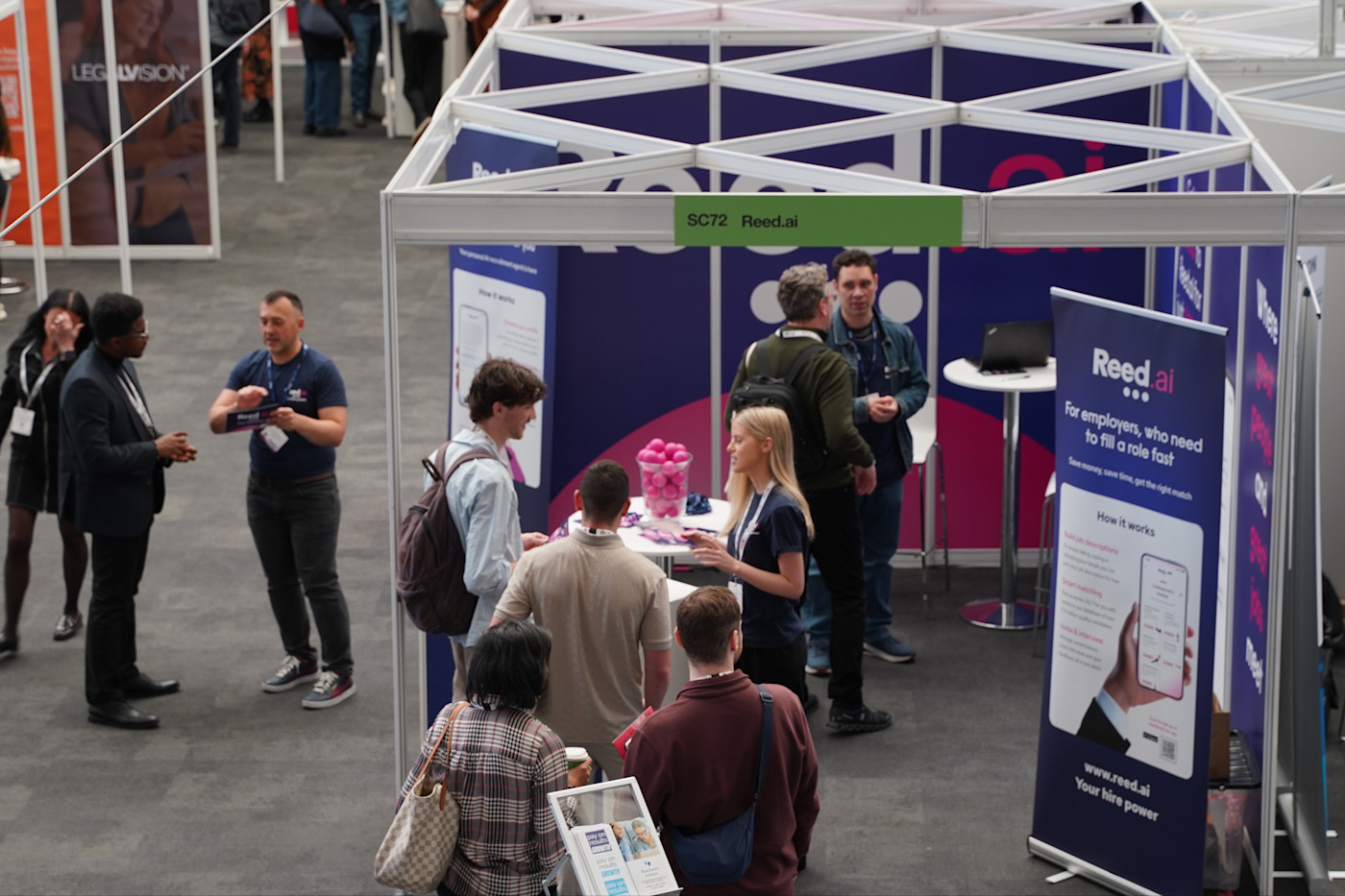

The UK labour market is going through a period of change. According to the Office for National Statistics, there are around 721,000 vacancies in the UK as of early 2026, down 9.5% year on year. Job postings remain 19% below pre-pandemic levels (Indeed, 2026 UK Hiring Trends). Yet 76% of employers still report difficulty filling positions (Career Moves Group, 2026). Fewer roles, but still hard to fill the right ones. That is where AI can genuinely help.
AI hiring tools work in different ways. Some rely on keyword matching, others on structured assessments. Reed.ai works by analysing job descriptions and matching them against candidate profiles based on skills and experience, surfacing the most relevant people quickly rather than waiting for them to find you. Accuracy depends on how clearly the role is defined and how complete the candidate profiles are.
High-volume screening, consistently applying the same criteria across thousands of applications
Scheduling and logistics, reducing time to interview by automating coordination
Identifying strong matches, surfacing candidates who closely fit a well-defined role profile
AI struggles with roles requiring nuanced judgement, cultural contribution, or potential beyond current experience. It also performs poorly when the role brief is vague. Human oversight remains essential at every stage. That is why Reed.ai pairs its AI with recruitment coaches who work alongside the technology, bringing the kind of human judgement that no algorithm can replicate. The platform is built to make AI and people work together, not to replace one with the other.
The proof is in the results. Reed.ai hired its own Senior Product Designer, Linda, in just 8 days through the platform. The team also hired our Customer Engagement Executive, Adrien in 6 days. These are not outlier results; they reflect what happens when AI matching, a large candidate pool, and a well-written role brief work together.
The most effective approach combines AI screening for volume and consistency with human assessment for judgement and fit. Use AI to narrow the field, then invest human time where it adds most value: competency interviews, reference checks, and offer conversations.


Does AI make hiring more accurate?
Where does AI perform well in hiring?
Where does AI fall short in hiring?
How does Reed.ai keep hiring accurate?
What results has Reed.ai achieved?
How should employers use AI to improve hiring outcomes?


